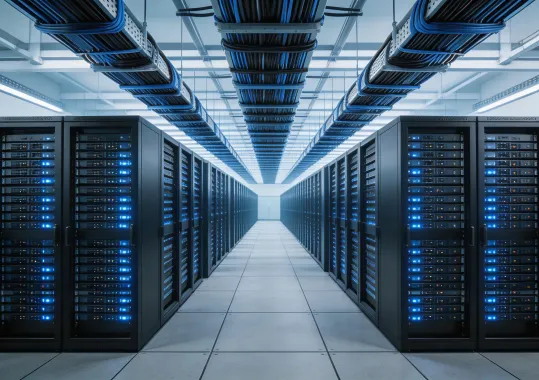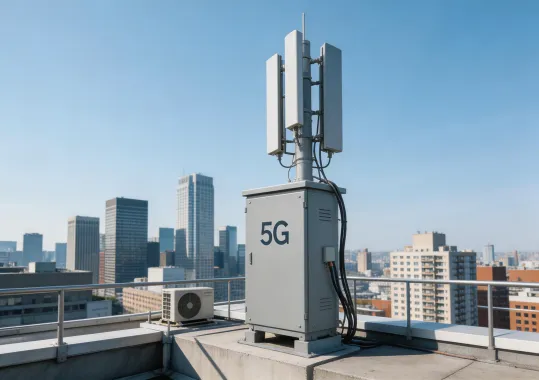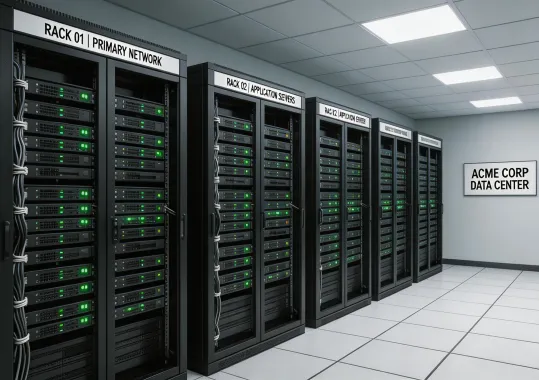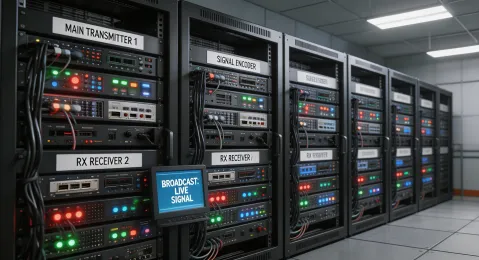
From central offices to cell tower bases, our infrastructure solutions are designed and tested for the specific requirements of each deployment environment.
Tier-1 and regional carriers depend on Vertiv cabinets and enclosures across their entire network footprint — from climate-controlled central office frames to hardened remote terminal cabinets in the outside plant.
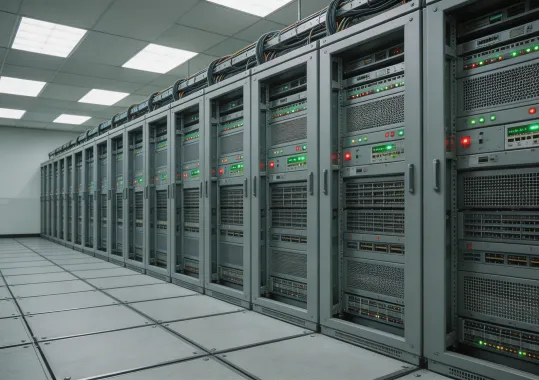
Colocation providers, hyperscalers, and enterprise IT departments use Vertiv server racks and fiber distribution systems to maximize floor density while maintaining serviceability and airflow management.
The densification required by 5G mmWave and edge compute deployments demands compact, thermally efficient enclosures that can be mounted on poles, rooftops, and urban street furniture.
Campus, branch, and headquarter network infrastructure requires modular racks and distribution systems that can adapt to evolving IT requirements without disruptive forklift upgrades.
RF-shielded enclosures and transmission equipment housing for terrestrial broadcast, satellite earth stations, and media production facilities. Our cabinets provide the electromagnetic isolation and thermal stability that sensitive broadcast equipment demands.
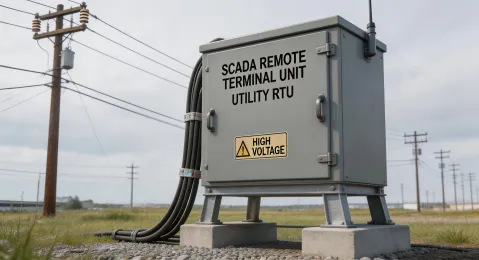
Ruggedized outdoor cabinets protecting remote monitoring and control equipment for electric utilities, water treatment facilities, and pipeline operators. MIL-STD-810 rated for extreme temperature, humidity, and vibration conditions.
Indoor installations (central offices, data centers) benefit from controlled environments — eliminating the need for IP-rated sealing, active cooling, and corrosion-resistant coatings. This reduces per-cabinet cost by 30-45% compared to equivalent outdoor units. However, indoor deployments require building lease agreements, utility connections, and physical security infrastructure that outdoor cabinets avoid. For greenfield 5G small cell sites, outdoor cabinets deployed at the base of poles or on rooftops can eliminate the real estate acquisition step entirely, despite higher per-unit hardware costs.
Traditional telecom networks centralize equipment in large central offices, minimizing the number of enclosures but requiring long cable runs and aggregation points. 5G and edge computing architectures distribute smaller equipment nodes closer to end users, requiring many more enclosures (10-50x the site count) but with smaller footprints per site. The infrastructure cost model inverts: centralized deployments spend more on large cabinets and cable management, while distributed deployments spend more on site acquisition, mounting hardware, and remote monitoring systems. Neither model is inherently superior — the choice depends on traffic density, latency requirements, and available real estate.
Tell us about your deployment environment and requirements. Our engineering team will recommend the right infrastructure solution for your specific application.
Discuss Your Project